
Akwa Ibom State has recorded a modest decline in HIV prevalence, with the rate dropping from 4.8 percent to 4.3 percent, according to findings from the 2024 Nigeria State-Level Antiretroviral Therapy (ART) Impact Survey (AIS).
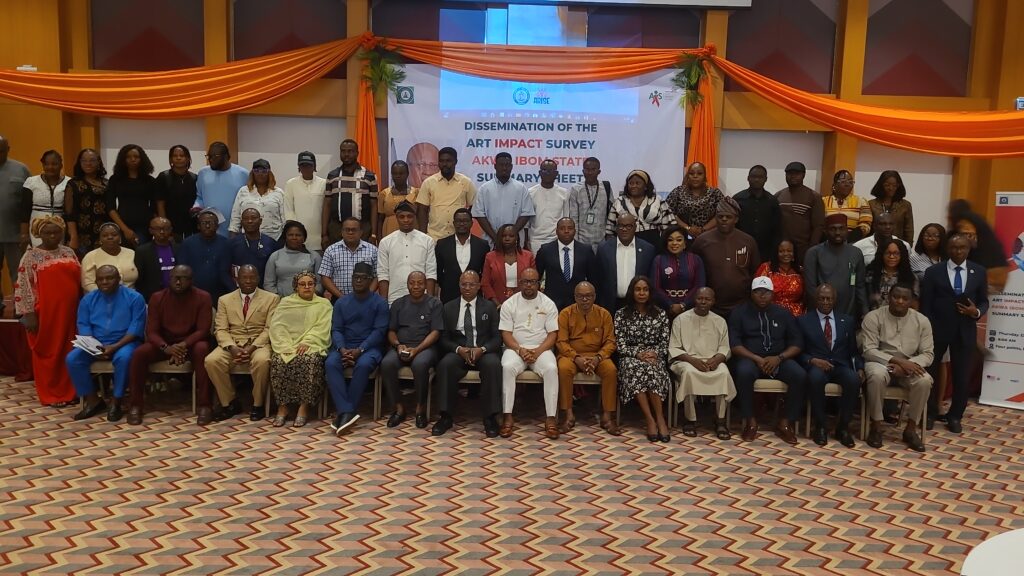
The household-based survey, conducted between August and October 2024, was unveiled on Thursday at Four Points by Sheraton, Ikot Ekpene, Akwa Ibom State. The presentation brought together key stakeholders, including the Akwa Ibom State Commissioner for Health, Dr. Ekem Emmanuel; Rt. Hon. Sam Ikon; Director of HIV, Department of Reproductive Health Management, Dr. Fatima Jegere; representatives of the National Agency for the Control of AIDS (NACA); and the Federal Ministry of Healt, Dr. Sabina Aki.
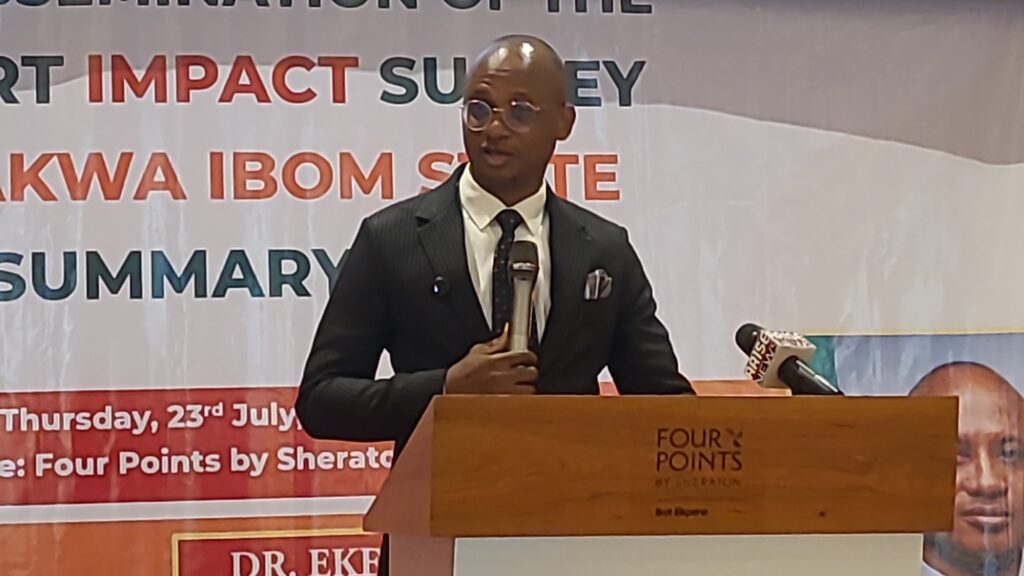
Presenting the findings, Dr. Okon Ubong, Lead, Epidemiology, Survey and Implementation Science at PHIS, Abuja, highlighted progress towards the global 95-95-95 HIV targets, while also identifying critical gaps in HIV case detection and treatment outcomes.
According to the report, 2,910 eligible households were selected for the survey, with 97 percent successfully completing household interviews. Of the 5,705 eligible adults—comprising 3,205 women and 2,500 men—a total of 5,094 participants consented to HIV testing and interviews, representing an overall response rate of 86.6 percent.
HIV testing followed Nigeria’s national rapid diagnostic testing algorithm, with laboratory confirmation of all positive samples. Confirmed HIV-positive specimens also underwent viral load testing and screening for antiretroviral medicines, including dolutegravir, atazanavir, and tenofovir diphosphate metabolites, to assess treatment uptake and effectiveness.
Despite the decline in prevalence, the survey revealed significant challenges.
Women continued to bear a higher burden of HIV infection, while men recorded lower rates of viral load suppression, raising concerns about ongoing HIV transmission. The survey further found that about half of adults living with HIV in Akwa Ibom State were unaware of their status, highlighting a major gap in HIV diagnosis.
Dr. Ubong stressed that intensified case-finding strategies are urgently required if the state is to achieve the first of the UNAIDS 95-95-95 targets, which seeks to ensure that 95 percent of people living with HIV know their status.
The survey, however, reported encouraging progress in treatment uptake. More than 95 percent of adults who were aware of their HIV-positive status were receiving antiretroviral therapy, demonstrating strong linkage to treatment. However, fewer than 75 percent of those on treatment had achieved viral suppression, indicating the need to strengthen adherence support and treatment monitoring.
Responding to the findings, the Akwa Ibom State Commissioner for Health, Dr. Ekem Emmanuel, called on development partners to sustain and expand support through increased funding, public awareness campaigns, and aggressive HIV testing initiatives. He also advocated greater involvement of state agencies in future surveys to enhance ownership of HIV response strategies.
Speaking with journalists after the presentation, Dr. Enobong Akpan, Project Manager of the Akwa Ibom State Agency for the Control of AIDS (AKSACA), said the survey provides critical evidence for strengthening HIV interventions, particularly in identifying undiagnosed cases and expanding public awareness.
He explained that although the state’s HIV prevalence has declined to 4.3 percent, the figure still translates to a substantial disease burden.
“A prevalence rate of 4.3 percent means that out of every 100 people, about four are living with HIV. With Akwa Ibom’s estimated population of 7.8 million, we are talking about more than 300,000 people living with HIV,” he said.
According to him, only about half of the estimated number of people living with HIV have so far been identified and enrolled in care, leaving thousands undiagnosed within communities.
“Those individuals need to be identified and placed on treatment. Otherwise, they will continue to unknowingly transmit the virus,” Dr. Akpan warned.»
Addressing concerns that poverty may be contributing to the state’s HIV burden, Dr. Akpan said the socioeconomic challenges facing Akwa Ibom are not unique. He noted that the state government has implemented several social protection measures, including health insurance schemes and food support programmes for vulnerable populations.
He added that AKSACA is collaborating with the Ministry of Humanitarian Affairs to prioritise food distribution for people living with HIV, helping to improve treatment adherence and overall wellbeing.
The survey findings are expected to guide the next phase of HIV programming in Akwa Ibom as health authorities intensify efforts to identify undiagnosed cases, improve viral suppression, and accelerate progress towards ending the HIV epidemic.

